
Clinton County Arrest History
An arrest can create four related but distinct records. The arresting agency writes the incident report. Clinton County Jail makes a booking and custody record. A fingerprintable event may reach the Illinois State Police Bureau of Identification under a transaction control number. If the State's Attorney files a charge, the Circuit Clerk opens a case.
Agencies include the sheriff, ISP, and municipal departments in Breese, Carlyle, Germantown, New Baden, and Trenton. Aviston receives sheriff nonemergency coverage. No county-wide police-report pool exists, so the badge, citation, or reliable first-hand notice identifying the agency is often the best starting clue.
No Clinton County Jail Roster
No official online Clinton County roster, booking log, blotter, mobile app, or sample profile was found in official sources. Call the jail at 618-594-4556 with a full name and enough identifiers for staff to distinguish the person. Disclosure may be limited.
The Clinton County Sheriff's page supplies the office and jail contacts.
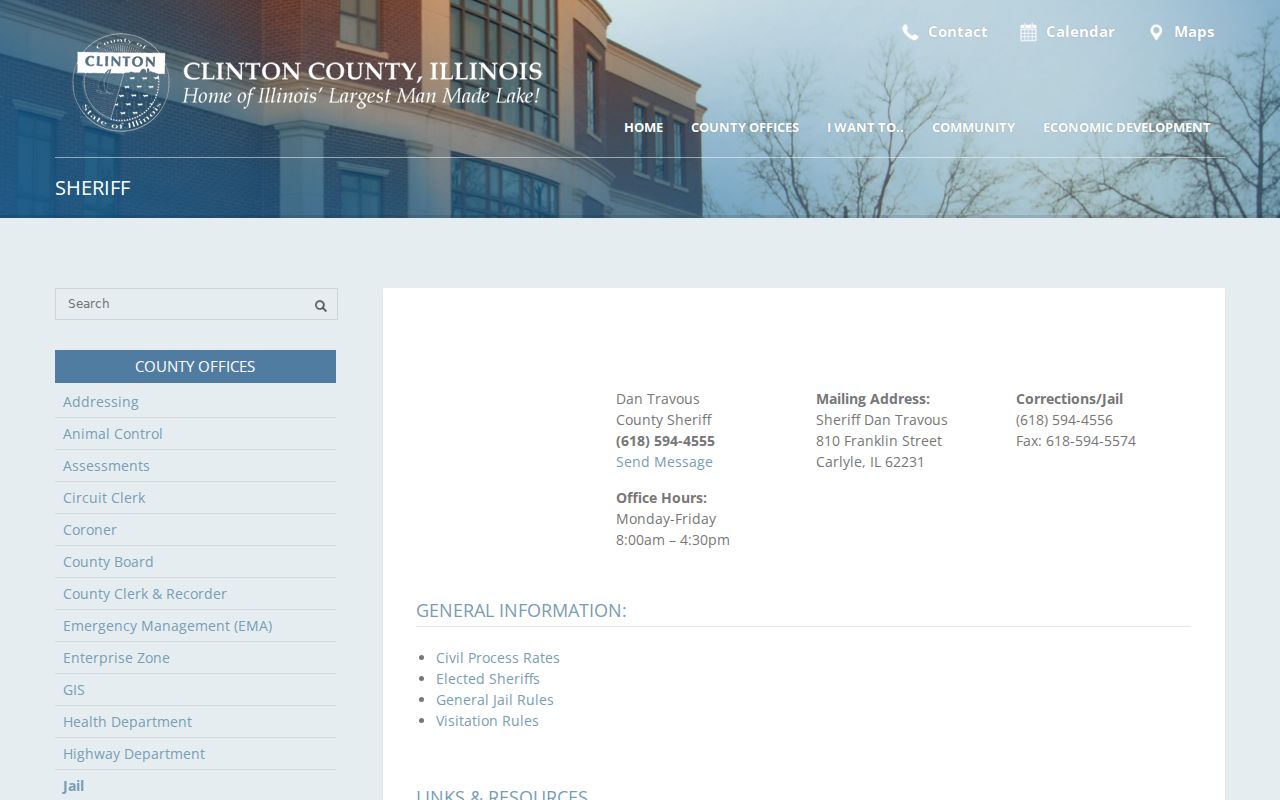
The source confirms where to ask about present custody, but it is not a booking gallery.
Looking Up Clinton County Arrests
Use every channel because each answers a different question. The jail gives current custody information. Police reports describe the event. Judici shows filed adult court cases. ISP Access and Review is the best path for someone inspecting and correcting their own fuller Illinois transcript.
- Record the full name, approximate arrest date and place, and named agency.
- Call Clinton Jail at 618-594-4556 for releasable current-custody status.
- Request the report from the agency that made the arrest.
- Check Clinton Judici after allowing time for filing.
- For your own state record, use ISP Access and Review.
Inside a Clinton County Arrest Record
Ask for specific existing fields rather than a broad “history.” No public county sample was available, so these are request targets, not claims about an online profile. Internal medical, mental-health, housing, suicide-watch, and security classifications should not be expected as public data.
| Booking Number | Local identifier to connect jail records. |
|---|---|
| Booking Date & Time | When jail intake was entered. |
| Arresting Agency | Office that created the arrest report. |
| Charges | Allegations presented at intake, subject to change. |
| Pretrial Order | Release or detention information when releasable. |
| Booking Photo | No official local publication policy was verified; ask the custodian. |
| Release Status | Release, transfer, or current custody information. |
Clinton Booking and Police Reports
A jail entry and police narrative are not the same document. The sheriff holds a county booking even when Breese Police or ISP made the arrest. The arresting agency retains its own report. First identify the agency, then send a focused Illinois FOIA request naming the incident number, date, location, record sought, and preferred electronic or paper format.
For sheriff records, call 618-594-4555, then use the county FOIA route for nonroutine documents. The county FOIA officer is at 850 Fairfax Street and can be reached at 618-594-6645. Illinois FOIA generally provides five business days for a noncommercial response, with a written extension allowed in defined cases. The first 50 ordinary black-and-white pages are free; later pages may cost up to 15 cents each.
Booking Logs and Recent Arrests
Because Clinton County publishes no verified roster or recent-arrest blotter, do not rely on third-party mugshot pages. Call the jail for current status, ask the proper agency for the report, and watch the Circuit Clerk index for a filed adult case. These channels may update at different times.
A person can be released before a case appears. Prosecutors can decline or revise a booking charge. A name can also be confused with someone else's. Record the case or booking number and compare dates before linking records.
The Illinois Sheriffs' Association Clinton profile reports a 53-bed jail.
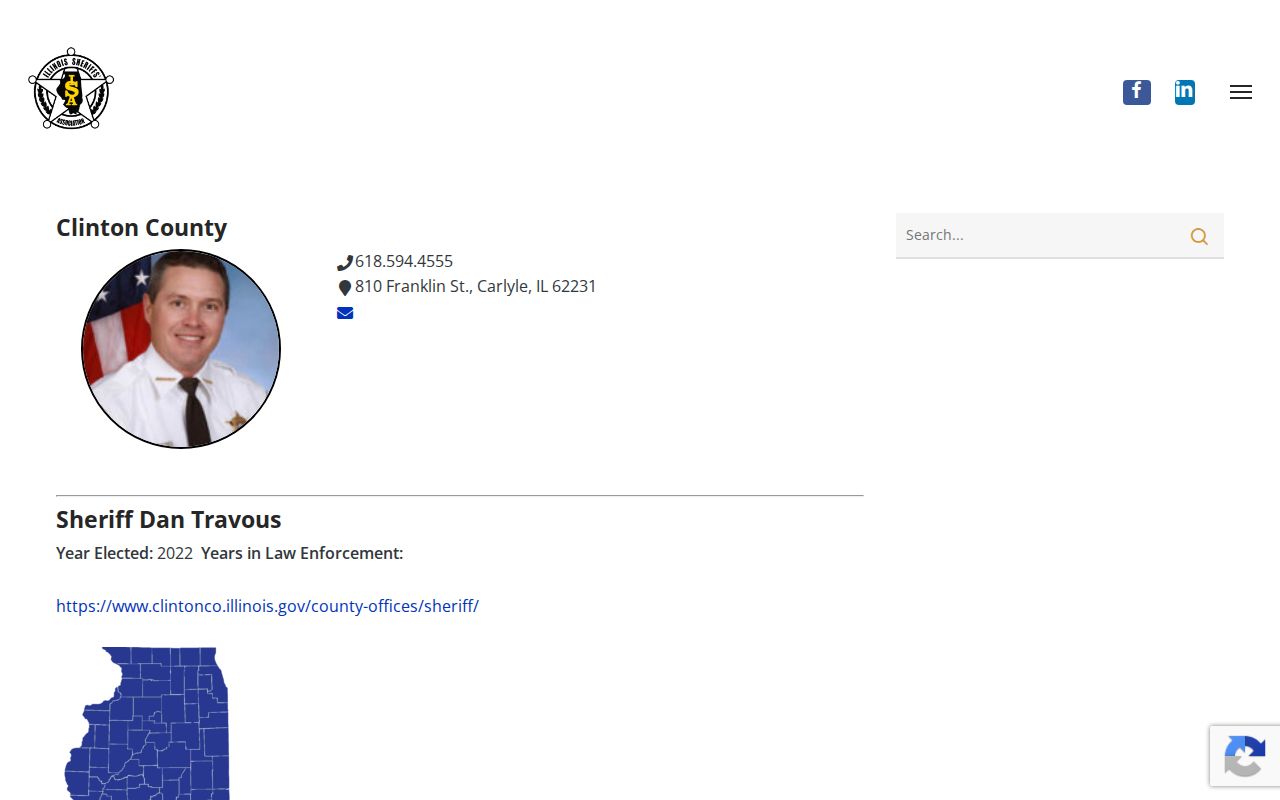
That capacity supplies local context, not a live count of people in custody.
Agency-by-Agency Clinton Requests
Breese Police has the clearest local web route: its Police FOIA form supports a date range, record description, email or City Hall pickup, fee acceptance, and signature. New Baden Police accepts contact at 618-588-7741 and police@NewBadenIL.com, with Village Hall as a FOIA fallback. Trenton publishes a police FOIA policy and says no special form is required.
New Baden spans Clinton and St. Clair counties. Confirm the county shown on paperwork and the jail destination before searching a court. Germantown, Carlyle, Centralia, ISP, and the sheriff each keep their own reports. Dispatching the call does not necessarily make the sheriff the report author.
Note: Ask the agency to identify redactions and the legal basis for any denied portion.
From Fingerprints to ISP Cycles
For a fingerprintable arrest, the agency sends prints and descriptive data to the Illinois State Police Bureau of Identification. ISP uses biometric matching to establish or update an Illinois SID and group the arrest into a criminal-history cycle. Later disposition data should return from the court, but old records, reporting delay, name variations, or unmatched identifiers can leave a cycle incomplete.
A certified Clinton County disposition and fingerprint Access and Review provide the sound correction path for your own record. A public name inquiry is narrower and can miss a recent arrest, while a jail call cannot reveal old convictions elsewhere in Illinois. Each source must stay within its purpose.
Clinton Jail Custody Clues
The Clinton County Jail is a 53-bed facility at 810 Franklin Street in Carlyle. Its custody record does not decide guilt or predict the final charge. Intake commonly creates identifiers, inventory, fingerprints or a photograph when required, medical and security screening, and an entry for charges presented at booking. A judge then addresses release or detention. Later jail events may record release or transfer.
The official jail rules describe practical channels that can confirm custody without serving as a case search. A 24-hour Stellar lobby kiosk and the JailATM service accept funds, subject to service charges. Those systems are custody services, not proof of a court result. Mail rules require a sender name and return address, white paper and envelope, and blue or black ink, pencil, or type. The published material limits photos to 4 by 6 inches and ten, and allows up to three softcover books sent directly by a publisher.
Visitation information comes from a dated 2015 county PDF, so call 618-594-4556 before relying on it. That document lists separate time blocks for federal and other men and women, requires check-in at least 30 minutes before closing, and permits two 20-minute visits or one 40-minute visit weekly. Visitors need government photo identification and undergo LEADS, NCIC, warrant, and order-of-protection checks. The form asks for name, date of birth, address, phone, vehicle details, inmate, relationship, date, time, and key number.
These operational records offer clues that someone was held, received funds, or had an approved visit, but they do not establish the filed charge or disposition. Use the clerk's docket for the prosecution. If a sentenced person moves to state custody, use the IDOC Individual in Custody Search guidance. Federal custody belongs in the federal Bureau of Prisons system. A narrow FOIA request is the fallback for older Clinton booking material that is not routinely released by phone.
Current-custody and record-copy requests should remain distinct. Ask jail staff for the releasable status first. For a document, identify the booking date, person, agency, and fields sought. Broad demands for internal medical, mental-health, protective-custody, housing-pod, suicide-watch, or classification material can implicate privacy and security limits. A precise request for booking identity, agency, dates, charge as booked, release, transfer, and releasable order information is far more useful.
Clinton County Arrests After Dismissal
A dismissal or acquittal does not itself erase the arrest, booking, or ISP cycle. Illinois relief depends on the outcome and offense. A person reviewing their own record can obtain the statewide court-approved expungement and sealing forms, identify every arresting agency and case number, and file in each relevant county. Keep certified orders and proof of service.
After an order enters, agencies need time to process it. If an ordinary public index still shows the precise case, compare the order with the case and agency identifiers before contacting the clerk or police custodian. ISP Access and Review can reveal whether a state cycle remains and supplies the challenge route. A private display does not prove that the official source failed to comply.
Clinton County records can also disagree before relief because a disposition has not yet matched the arrest cycle. The certified clerk judgment states what the court decided. Pair it with the fingerprint-based self-review rather than relying on a public name query. This approach protects against name confusion and keeps the arrest allegation separate from the outcome.
Arrests Are Not Convictions
An arrest is an allegation and custody event. A conviction follows a guilty plea or finding in court. The State's Attorney may decline, add, amend, or dismiss charges; a judge or jury may acquit. Even a favorable result can leave agency and repository entries until expungement, sealing, or correction rules apply.
| Arrest Record | Conviction Record |
|---|---|
| Created by police and jail | Created by the court; reported to ISP |
| Shows an arrest or booking occurred | Shows a formal finding of guilt |
| Held by agency and jail | Held by clerk and state repository |
| May lead to release, no charge, dismissal, or case | May lead to sentence, appeal, or sealing |
Note: An arrest is not proof of guilt, and a booking charge may never become a filed or sustained charge.
ISP's public UCIA name inquiry reports Illinois conviction information, not every arrest. A person reviewing their own fuller record should use fingerprint Access and Review and may challenge an incomplete or mismatched cycle with supporting documents such as a certified disposition.